

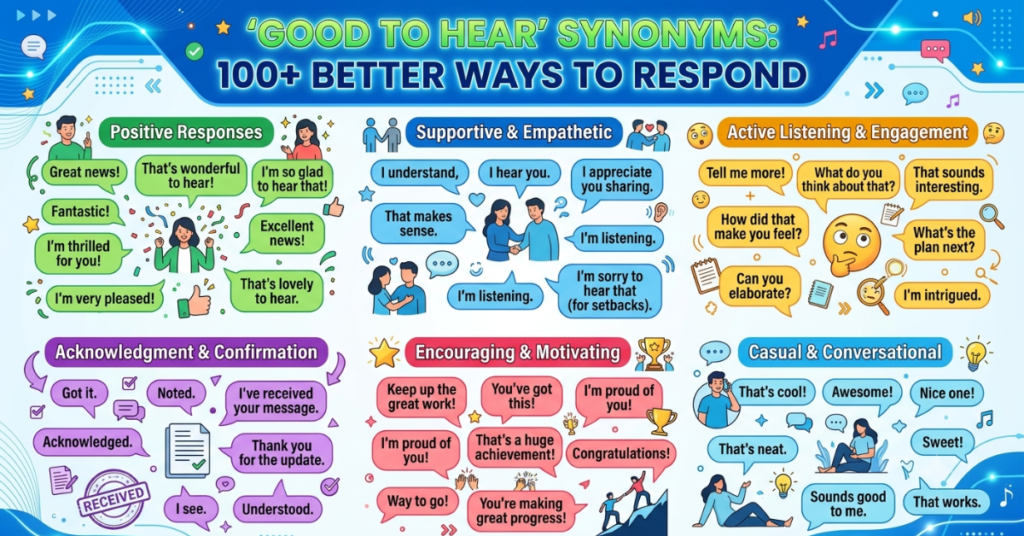
Have you ever caught yourself replying with “good to hear” over and over again? Whether you’re chatting with a friend, replying to an email, or responding in a professional meeting, repeating the same phrase can make your conversations sound predictable.
That’s where good to hear synonyms come in. Learning alternative expressions helps you communicate with more warmth, professionalism, and personality. In this guide, you’ll discover over 100 alternatives, understand when to use each one, and learn the subtle differences between similar expressions so your responses always feel natural.
What Does “Good to Hear” Mean?
“Good to hear” is a common English expression used to show happiness, relief, or satisfaction after hearing positive news. It tells the speaker that you’re pleased by what they shared.
For example:
- “I got the job!”
- “Good to hear!”
- “My surgery went well.”
- “That’s good to hear.”
The phrase is friendly, neutral, and appropriate in both casual and professional settings. However, depending on the situation, another expression may sound more genuine or fitting.
Why Use Alternatives to “Good to Hear”?
Using different expressions can make your communication:
- Sound more natural
- Show genuine emotion
- Match different situations
- Improve professional writing
- Expand your English vocabulary
Instead of repeating one phrase, you can choose wording that better reflects your feelings.
Best Good to Hear Synonyms
Below are some of the most useful alternatives.
| Synonym | Best For | Tone |
| Glad to hear that | Everyday conversations | Friendly |
| Happy to hear that | Personal messages | Warm |
| That’s wonderful | Celebrating good news | Enthusiastic |
| That’s fantastic | Exciting achievements | Energetic |
| Great news | Quick responses | Casual |
| Excellent | Professional settings | Positive |
| That’s reassuring | Relief | Calm |
| I’m pleased to hear that | Business emails | Professional |
| What wonderful news | Congratulations | Warm |
| That’s amazing | Big accomplishments | Excited |
| I’m delighted to hear that | Formal conversations | Polite |
| That’s encouraging | Progress updates | Supportive |
| That’s comforting | Emotional situations | Caring |
| I’m relieved to hear that | Difficult situations | Empathetic |
| That’s excellent news | Workplace communication | Formal |
Casual Alternatives
When chatting with friends or family, these phrases sound relaxed and genuine.
Friendly Expressions
- Awesome!
- That’s great!
- Nice!
- Love hearing that!
- Sweet!
- Fantastic!
- That’s exciting!
- Amazing!
- Wonderful!
- Brilliant!
Examples
Friend:
I finally passed my driving test.
You:
That’s awesome!
Friend:
My vacation was incredible.
You:
Love hearing that!
Professional Alternatives
In business communication, choosing polished wording creates a stronger impression.
Professional Options
- I’m pleased to hear that.
- That’s excellent news.
- I’m glad to hear the update.
- Thank you for sharing the positive news.
- It’s encouraging to hear that.
- That’s wonderful progress.
- I’m delighted to hear that.
- It’s great to know.
- I’m happy to learn that.
- That’s reassuring.
Email Example
Employee:
The client approved the proposal.
Manager:
I’m pleased to hear that. Thank you for your excellent work.
Formal Alternatives
Formal situations often require more polished language.
Some excellent choices include:
- I’m delighted to hear that.
- That’s most encouraging.
- I’m very pleased to hear this.
- What wonderful news.
- It brings me great pleasure to hear that.
- I’m grateful to hear this.
- This is excellent news.
- I’m truly happy to hear that.
These expressions work well in official letters, interviews, presentations, and formal emails.
Enthusiastic Ways to Say It
Sometimes positive news deserves extra excitement.
Try saying:
- That’s incredible!
- What amazing news!
- I’m thrilled to hear that!
- That’s absolutely fantastic!
- Wonderful!
- Outstanding!
- That’s brilliant!
- I’m so happy for you!
- That’s the best news today!
- You must be thrilled!
Empathetic Alternatives
If someone has gone through a difficult experience, showing empathy matters.
Instead of simply saying “good to hear,” consider:
- I’m relieved to hear that.
- That’s comforting.
- I’m glad everything worked out.
- What a relief.
- I’m happy things are improving.
- That’s reassuring.
- I’m thankful to hear that.
- I’m so glad things are better now.
- That’s encouraging.
- I’m happy you’re doing well.
Better Responses for Specific Situations
When Someone Gets a New Job
Instead of “Good to hear”:
- Congratulations!
- That’s fantastic news.
- You deserve it.
- I’m so happy for you.
When Someone Recovers From Illness
Better responses include:
- I’m relieved to hear you’re feeling better.
- That’s wonderful news.
- I’m so glad you’re recovering.
- Wishing you continued good health.
When Someone Passes an Exam
You could say:
- Excellent work!
- That’s amazing.
- Congratulations!
- Well done!
- You earned it.
When Someone Shares Good Business News
Professional responses include:
- That’s excellent progress.
- Wonderful news.
- Congratulations on the achievement.
- I’m pleased to hear everything went well.
Good to Hear vs Glad to Hear
Many English learners wonder whether these expressions mean the same thing.
| Good to Hear | Glad to Hear |
| Neutral expression | More personal |
| Common in daily speech | Slightly warmer |
| Suitable for most situations | Shows stronger emotion |
| Often used as a quick reply | Sounds more heartfelt |
Example:
Person:
I finally found a new apartment.
Response:
Glad to hear that!
This feels slightly warmer than simply saying “Good to hear.”
Expressions That Sound More Natural
Native English speakers often use these instead:
- That’s wonderful.
- Great to know.
- Glad everything worked out.
- Love hearing that.
- Couldn’t be happier for you.
- That’s exactly what I hoped to hear.
- That’s welcome news.
- What a pleasant surprise.
- I’m genuinely happy for you.
- That’s music to my ears.
These expressions help conversations sound more authentic.
Common Mistakes to Avoid
1. Repeating the Same Phrase
Avoid responding with “good to hear” every single time.
Instead, rotate between different expressions.
2. Using Informal Expressions in Formal Emails
Instead of:
Awesome!
Write:
I’m pleased to hear that.
3. Overreacting to Small News
If someone says:
I finished my homework.
Saying:
That’s absolutely life-changing!
may sound sarcastic.
Choose a response that matches the situation.
Tips for Choosing the Right Expression
Before replying, think about:
- How well do you know the person?
- Is the conversation formal or casual?
- Is the news exciting or simply positive?
- Does the situation require empathy?
Matching your words to the context makes your response feel more sincere.
Key Takeaways
- “Good to hear” is a versatile phrase, but alternatives make conversations more engaging.
- Casual, professional, and formal settings each call for different expressions.
- Showing the right level of enthusiasm helps your response feel authentic.
- Context matters just as much as vocabulary.
- Expanding your response options improves both spoken and written English.
Frequently Asked Questions
What are the best good to hear synonyms?
Some of the best alternatives include glad to hear that, happy to hear that, that’s wonderful, I’m pleased to hear that, that’s great, and I’m delighted to hear that. The best choice depends on the tone and situation.
Is “good to hear” professional?
Yes. It’s acceptable in professional communication, but phrases like I’m pleased to hear that or That’s excellent news often sound more polished in business settings.
What’s a more formal way to say “good to hear”?
Formal alternatives include I’m delighted to hear that, That’s excellent news, I’m very pleased to hear that, and It’s encouraging to hear this.
Can I say “good to hear” in an email?
Absolutely. It’s common in emails, especially when replying to positive updates. For formal emails, consider using a slightly more refined alternative depending on your audience.
What’s the difference between “good to hear” and “glad to hear”?
Both express happiness about positive news. However, glad to hear usually feels more personal and emotionally warm, while good to hear is more neutral and versatile.
How can I sound more natural instead of saying “good to hear”?
Mix in phrases like That’s wonderful, Great news, I’m happy for you, That’s reassuring, or Love hearing that. Choosing expressions that fit the situation makes your conversations feel more genuine.
Conclusion
Expanding your vocabulary beyond a single phrase can make a noticeable difference in how you communicate. While “good to hear” remains a perfectly appropriate response, knowing a variety of alternatives allows you to express enthusiasm, empathy, professionalism, or warmth with greater precision.
Whether you’re writing a business email, congratulating a friend, or responding to someone’s good news, the right expression helps your message feel more thoughtful and authentic. Start incorporating these alternatives into your everyday conversations, and you’ll sound more confident, engaging, and fluent in English.