
Have you ever heard someone say “Bon appétit!” before a meal and wondered what it actually means? Whether you’re watching a cooking show, dining at a French restaurant, or traveling abroad, this elegant phrase appears everywhere.
Understanding the bonappetit meaning goes beyond a simple translation. It reflects centuries of French culture, dining etiquette, and the universal wish for someone to enjoy their meal. In this guide, you’ll learn its definition, pronunciation, history, proper usage, common mistakes, and examples from everyday conversations.
What Does Bonappetit Mean?
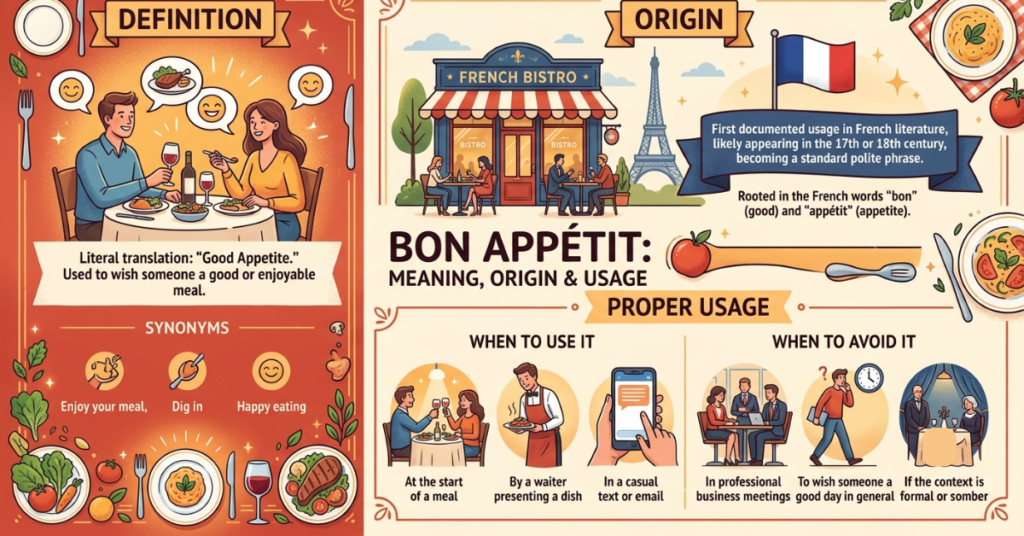
The bonappetit meaning is “enjoy your meal” or “have a good meal.”
The phrase comes from French:
- Bon = Good
- Appétit = Appetite
When combined, “Bon appétit” literally means “good appetite.” However, its practical English equivalent is “Enjoy your meal.”
It is commonly said before people begin eating as a polite and friendly wish that they enjoy the food.
Example:
Host: Dinner is served. Bon appétit!
Guest: Thank you!
The Origin of Bon Appétit
The phrase has been part of French culture for centuries.
Historically, French families and hosts used Bon appétit before meals to express hospitality and kindness toward their guests. Over time, the expression spread beyond France and became recognized internationally.
Today, it is commonly heard in:
- French restaurants
- Cooking television shows
- Travel destinations
- Fine dining settings
- Family dinners
- Hotels and cafés
Its popularity has made it one of the most recognizable French expressions worldwide.
How Do You Pronounce Bon Appétit?
Many English speakers mispronounce the phrase.
The closest pronunciation is:
bon ah-pay-TEE
IPA pronunciation:
/bɔ̃.na.pe.ti/
A few pronunciation tips:
- The “t” in bon is silent.
- The final syllable “tee” is emphasized.
- The word flows smoothly without pausing between bon and appétit.
You don’t need a perfect French accent—clear pronunciation is perfectly acceptable in casual conversation.
Is It “Bonappetit” or “Bon Appétit”?
This is one of the most common questions.
The correct French spelling is:
Bon appétit
Notice:
- Two separate words
- Accent mark on the é in appétit
However, many English speakers write:
- Bonappetit
- Bon appetit
- Bon-Appetit
While search engines recognize these variations, the proper French spelling remains Bon appétit.
When Should You Say Bon Appétit?
You usually say it just before people begin eating.
Common situations include:
- Hosting dinner at home
- Serving guests
- Eating at restaurants
- Holiday meals
- Weddings
- Business lunches
- Family gatherings
- Formal dining events
Example
“Everyone has their food? Great—Bon appétit!”
When Should You Avoid Saying Bon Appétit?
Although widely accepted internationally, there are situations where another expression may sound more natural.
You generally wouldn’t use it:
- After everyone has already started eating
- During the middle of the meal
- As a greeting
- Instead of saying hello
Timing matters—the phrase works best immediately before eating begins.
Is Bon Appétit Formal or Casual?
One reason the phrase is so popular is its flexibility.
It works well in both formal and informal settings.
Formal Examples
- Restaurant staff greeting diners
- Wedding receptions
- Corporate dinners
- Official banquets
Casual Examples
- Family dinner
- Lunch with friends
- Backyard barbecue
- Weekend brunch
Its versatility makes it appropriate almost anywhere food is being served.
Why Do People Say Bon Appétit?
The phrase expresses more than good manners.
It also communicates:
- Hospitality
- Warmth
- Respect
- Appreciation
- Shared enjoyment of food
In many cultures, wishing someone a pleasant meal is considered an important social courtesy.
Bon Appétit vs. Enjoy Your Meal
Both expressions carry nearly the same meaning.
| Bon Appétit | Enjoy Your Meal |
| French expression | English expression |
| Elegant and traditional | Direct and simple |
| Used internationally | Common in English-speaking countries |
| Often heard in restaurants | Used everywhere |
In everyday English conversations, “Enjoy your meal” may sound more natural, while “Bon appétit” often adds a touch of sophistication.
Examples of Bon Appétit in Sentences
Here are a few natural examples:
- “Bon appétit! I hope you love the homemade pasta.”
- “The waiter smiled and wished us bon appétit.”
- “Before everyone began eating, Grandma said, ‘Bon appétit.'”
- “Our French host welcomed us warmly and said bon appétit.”
- “Every cooking show seems to end with bon appétit.”
Common Mistakes People Make
Many learners accidentally misuse the phrase.
Here are the most common errors:
1. Writing It as One Word
Incorrect: Bonappetit
Correct: Bon appétit
2. Saying It Too Late
It should be spoken before eating begins.
3. Using It as a Greeting
It only relates to meals.
Incorrect: Bon appétit! (instead of Hello)
Correct: Hello!
4. Forgetting the Accent
In French, the correct spelling includes:
Appétit
Although English writing often omits accents, using the proper spelling is more accurate.
Similar Expressions Around the World
Many languages have their own version of wishing someone an enjoyable meal.
Some examples include:
| Language | Expression | Meaning |
| English | Enjoy your meal | Direct equivalent |
| Italian | Buon appetito | Good appetite |
| Spanish | Buen provecho | Enjoy your meal |
| German | Guten Appetit | Good appetite |
| Dutch | Eet smakelijk | Eat deliciously |
| Turkish | Afiyet olsun | May it be beneficial |
Despite the different words, they all share the same intention: wishing others a pleasant dining experience.
Why Bon Appétit Is So Popular
Several factors have helped the phrase become internationally recognized.
These include:
- French culinary influence
- Fine dining culture
- International travel
- Cooking competitions
- Television chefs
- Social media food content
- Global restaurant culture
Today, millions of people use the phrase even if they don’t speak French.
Practical Tips for Using Bon Appétit Naturally
If you want to sound natural, keep these tips in mind:
- Say it just before eating starts.
- Smile while saying it.
- Use it when serving guests.
- Don’t overthink the pronunciation.
- Pair it with friendly body language.
- In casual settings, “Enjoy your meal” works equally well.
Key Takeaways
- Bon appétit literally means “good appetite.”
- Its everyday meaning is “Enjoy your meal.”
- The phrase comes from French.
- It is said before people begin eating.
- It works in both formal and casual situations.
- The correct spelling is Bon appétit, not Bonappetit.
- It reflects hospitality, politeness, and appreciation for sharing food.
Frequently Asked Questions
What is the bonappetit meaning in English?
The bonappetit meaning in English is “Enjoy your meal.” It’s a polite expression used before eating to wish someone a pleasant dining experience.
Is Bon Appétit French?
Yes. Bon appétit is a French phrase that literally translates to “good appetite.” It has become widely used around the world.
Is it polite to say Bon Appétit?
Yes, in most countries it is considered polite and friendly. It is commonly used before meals at home, restaurants, and social gatherings.
Do French people still say Bon Appétit?
Yes, many French speakers continue to use the phrase before meals, although its frequency may vary depending on the family, region, or social setting.
How do you pronounce Bon Appétit correctly?
It is commonly pronounced as “bon ah-pay-TEE.” The “t” in bon is silent, and the final syllable is emphasized.
Is Bonappetit one word?
No. The correct spelling is Bon appétit, written as two words. While “Bonappetit” is a common online misspelling, it is not the standard French form.
Conclusion
The bonappetit meaning is much more than a translation of “good appetite.” It represents kindness, hospitality, and the simple pleasure of sharing food with others. Whether you’re dining at a French restaurant, hosting guests, or simply adding a touch of elegance to your table, saying Bon appétit is a timeless way to wish everyone an enjoyable meal.
Now that you understand its meaning, pronunciation, origin, and proper usage, you can confidently use the phrase in everyday conversations and appreciate the cultural tradition behind it. Explore more language guides to discover the fascinating stories behind everyday expressions.