
Have you ever typed hopeing and wondered if your spell checker was being too picky? You’re not alone. Many English learners and even native speakers get confused about hopeing or hoping because English spelling rules aren’t always obvious.
The good news is that the answer is simple once you understand the rule. In this guide, you’ll learn which spelling is correct, why the other one is incorrect, common examples, grammar rules, and an easy trick to remember it forever.
Hopeing or Hoping: Which Is Correct?
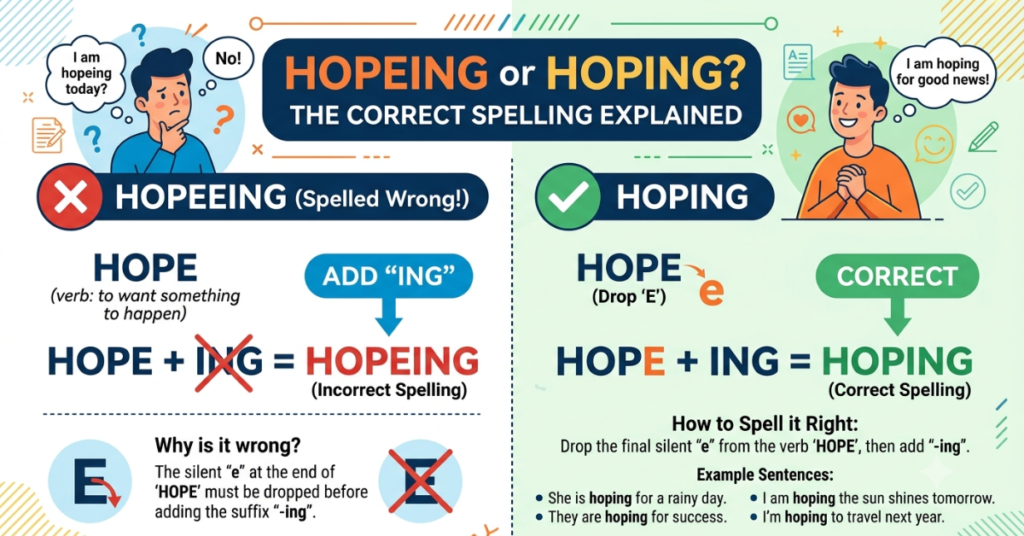
The correct spelling is hoping.
Hopeing is not a correct English word and is considered a spelling mistake.
Correct: hoping
Incorrect: hopeing
The word hoping is the present participle (or -ing form) of the verb hope.
Examples:
- I am hoping for good news.
- We’re hoping the weather stays sunny.
- She’s hoping to get accepted into college.
- They are hoping everything goes as planned.
Why Is “Hopeing” Incorrect?
Many people assume that because the base word ends in e (hope), they should simply add -ing to make hopeing.
However, English grammar follows a different rule.
The Silent “E” Rule
When a verb ends with a silent e, the e is usually dropped before adding -ing.
Examples:
| Base Verb | Correct -ing Form |
| hope | hoping |
| make | making |
| write | writing |
| come | coming |
| dance | dancing |
| smile | smiling |
Since hope ends with a silent e, you remove the e before adding -ing.
hope → hoping
What Does “Hoping” Mean?
Hoping means having a desire or expectation that something good will happen.
It expresses optimism, anticipation, or a wish for a particular outcome.
Examples
- I’m hoping my interview goes well.
- She’s hoping to travel next year.
- We’re hoping for the best.
- He kept hoping someone would call.
- They are hoping their team wins.
Why Do People Write “Hopeing”?
There are several reasons this mistake is so common.
1. The Base Word Ends with “E”
People naturally think they should keep every letter from the original word.
2. English Spelling Can Be Confusing
Some words keep their letters, while others change before adding endings.
3. Typing Quickly
Typing on a phone or computer often leads to accidental spellings like hopeing.
4. English Isn’t Your First Language
Many learners apply spelling patterns from their native language, making this error understandable.
The Grammar Rule Behind Hoping
Here’s the rule to remember:
If a verb ends with a silent “e,” remove the “e” before adding “-ing.”
Examples
- Bake → Baking
- Live → Living
- Love → Loving
- Save → Saving
- Hope → Hoping
Exceptions
Some English words don’t follow this pattern because of pronunciation or other spelling rules.
For example:
- Be → Being
- See → Seeing
- Agree → Agreeing
These verbs keep the e because removing it would change pronunciation or create confusion.
Easy Trick to Remember
Whenever you see a verb ending with a silent e, ask yourself:
“Does the e make the word sound different?”
If the answer is no, drop it before adding -ing.
Think of it like this:
Hope leaves its “e” behind before moving forward.
That simple image helps many learners remember the rule.
Examples of Hoping in Sentences
Here are everyday examples that show the correct usage.
- I’m hoping to finish the project today.
- She’s hoping for a positive response.
- We are hoping everything works out.
- They were hoping to arrive early.
- He’s hoping his package arrives tomorrow.
- The students are hoping for an easy exam.
- My parents are hoping I’ll visit this weekend.
- Everyone is hoping the event is successful.
Common Spelling Mistakes Similar to Hopeing
If you’ve written hopeing, you might also struggle with these words.
| Incorrect | Correct |
| hopeing | hoping |
| makeing | making |
| comeing | coming |
| writeing | writing |
| loveing | loving |
| danceing | dancing |
Learning one spelling rule helps you avoid many similar mistakes
Hoping vs Hope
These two words have different grammatical functions.
Hope
Hope is the base verb.
Examples:
- I hope you’re doing well.
- We hope to see you soon.
Hoping
Hoping is the present participle.
Examples:
- I’m hoping to hear from you.
- They’re hoping for better results.
How to Avoid Writing “Hopeing”
If you often make this mistake, try these tips:
- Remember the silent e rule.
- Read your writing before sending it.
- Use spell-check tools.
- Practice common -ing verbs.
- Read English books and articles regularly.
- Write a few example sentences each day.
Small habits quickly improve spelling accuracy.
Why Correct Spelling Matters
Using the correct spelling helps your writing appear more professional and trustworthy.
Whether you’re writing:
- Emails
- Essays
- Social media posts
- Job applications
- Business messages
- Blog articles
Correct spelling leaves a better impression and improves communication.
Quick Summary
Here’s everything you need to remember:
- Hoping is the correct spelling.
- Hopeing is incorrect.
- Drop the silent e before adding -ing.
- The rule applies to many English verbs ending in e.
- Practicing the rule makes it easier to remember.
Frequently Asked Questions (FAQs)
Is hopeing a real word?
No. Hopeing is not recognized as a correct English word. The correct spelling is hoping.
Why is hoping spelled without the “e”?
Because verbs ending in a silent e usually drop the e before adding -ing.
Is hoping grammatically correct?
Yes. Hoping is the correct present participle and gerund form of the verb hope.
What is the difference between hope and hoping?
Hope is the base verb, while hoping is its -ing form used in continuous tenses or as a gerund.
Can I ever write hopeing?
No. Standard English dictionaries and grammar guides consider hopeing a spelling error.
What are other words that follow the same rule?
Examples include:
- Making
- Writing
- Dancing
- Loving
- Saving
- Smiling
Conclusion
If you’ve been wondering whether hopeing or hoping is correct, the answer is straightforward: hoping is always the right spelling. The confusion comes from the silent e at the end of hope, but English grammar requires you to drop that e before adding -ing.
Once you understand this simple spelling rule, you’ll not only remember how to write hoping correctly but also improve your spelling with many other English verbs. Keep practicing, proofread your writing, and you’ll avoid this common mistake with confidence.