
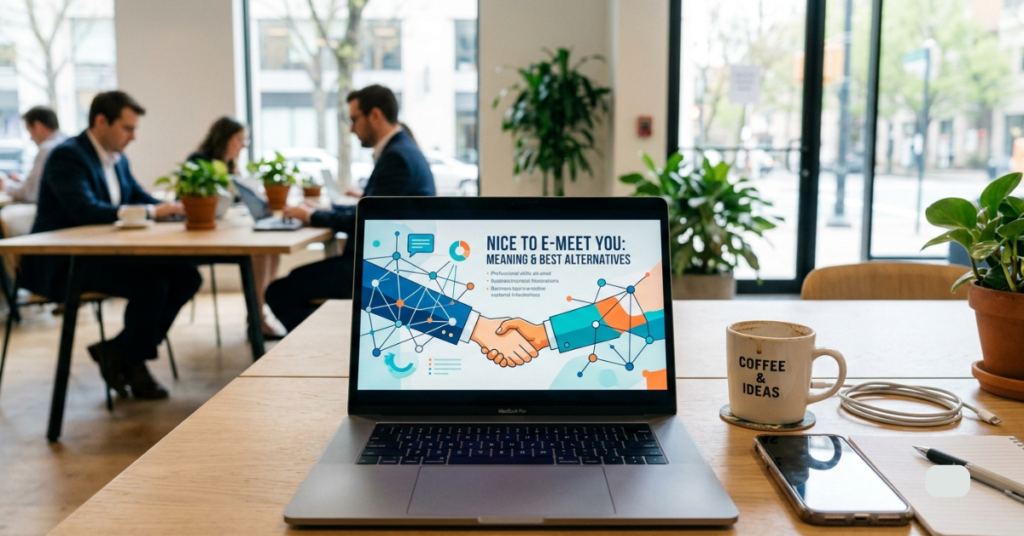
In the modern digital workplace, many professional relationships begin online rather than with a traditional handshake. Whether you are joining a remote team, attending a virtual event, or connecting through LinkedIn, you may come across the phrase “nice to e-meet you.”
But what does this expression actually mean? Is “it’s nice to e-meet you” suitable for professional conversations, or are there more natural ways to introduce yourself online?
This guide explains the nice to e-meet you meaning, how to use it correctly, and what to say instead of nice to e-meet you when you want your communication to sound more confident and genuine.
What Does “Nice to E-Meet You” Mean?
The phrase “nice to e-meet you” is an online version of the traditional greeting “nice to meet you.” The letter “e” refers to “electronic,” meaning the introduction happens through a digital platform rather than in person.
In simple words, it expresses that you are pleased to make someone’s acquaintance through an online interaction.
You may see this phrase used in:
- Professional emails
- LinkedIn messages
- Virtual meetings
- Online networking events
- Remote workplace introductions
For example:
“Hi Sarah, it’s nice to e-meet you. I’m excited to collaborate with you on this project.”
This type of greeting creates a polite and professional first impression.
Is “It’s Nice to E-Meet You” Professional?
Yes, this expression is considered professional and respectful, especially in situations where people are meeting virtually for the first time.
It works well when contacting:
- New colleagues
- Potential employers
- Clients
- Business partners
- Industry professionals
However, some people feel that the phrase sounds slightly formal or less common today. Since online communication has become normal, many professionals prefer simpler expressions that feel more natural.
Popular alternatives include:
- “It’s great to connect with you.”
- “I’m happy to connect with you.”
- “I’m glad we could connect.”
- “I look forward to working with you.”
These options maintain professionalism while creating a warmer tone.
When Should You Use This Online Greeting?
1. Professional Emails
When writing to someone you have never met before, this phrase can help create a friendly opening.
Example:
“Hello David, it’s nice to e-meet you. Thank you for taking the time to discuss this opportunity.”
It works especially well for business communication where you want to sound polite and approachable.
2. LinkedIn Networking
LinkedIn is one of the most common places where professionals use digital greetings.
Example:
“Hi Emma, it’s nice to e-meet you. I came across your profile and would love to stay connected.”
A personalized message is always more effective than sending a simple connection request.
3. Remote Team Introductions
For distributed teams, online introductions have become a normal part of starting a new role.
Example:
“Hi everyone, it’s nice to e-meet you all. I’m looking forward to being part of the team.”
This helps create a welcoming atmosphere among team members who may not meet face-to-face.
What to Say Instead of Nice to E-Meet You
If you want your message to sound more modern and conversational, consider these alternatives.
1. “It’s Great to Connect With You”
This is one of the most widely used professional alternatives.
Example:
“It’s great to connect with you. I would love to learn more about your work.”
It feels natural for LinkedIn, emails, and business networking.
2. “I’m Happy to Connect With You”
This option sounds friendly while maintaining a professional tone.
Example:
“I’m happy to connect with you and discuss possible opportunities.”
3. “It’s a Pleasure Connecting With You”
This version sounds more formal and polished.
Example:
“It’s a pleasure connecting with you. I appreciate the opportunity to speak with you.”
4. “I’m Glad We Could Connect”
This phrase feels warm and suitable for less formal professional conversations.
Example:
“I’m glad we could connect. I enjoyed learning about your experience.”
5. “Looking Forward to Working With You”
Use this when you already have a shared project or professional goal.
Example:
“It’s great to connect with you. I’m looking forward to working with you.”
Difference Between “Nice to E-Meet You” and “Nice to Meet You”
Although both phrases show politeness, they are used in different situations.
| Phrase | Meaning | Best Situation |
| Nice to meet you | Meeting someone personally | Face-to-face conversations |
| Nice to e-meet you | Meeting someone digitally | Emails, online meetings, LinkedIn |
| Great to connect with you | Creating an online relationship | Modern professional networking |
The main difference is that the digital version highlights that the first interaction happened online.
Common Mistakes When Using Digital Greetings
1. Repeating the Same Phrase Everywhere
Using the same introduction in every email can make your message feel copied and impersonal.
Try changing your wording depending on the situation.
Examples:
- “It’s great to connect with you.”
- “I’m pleased to connect with you.”
- “I’m looking forward to our conversation.”
2. Using It in Casual Conversations
This phrase is mainly suitable for professional settings.
For casual chats, you can use:
- “Great to meet you!”
- “Happy to connect!”
- “Nice talking with you!”
3. Not Explaining Why You Are Reaching Out
A greeting alone is not enough. A strong introduction should include your purpose.
Instead of:
“Nice to e-meet you.”
Try:
“It’s nice to e-meet you. I came across your work and wanted to connect regarding possible collaboration.”
This creates a stronger and more meaningful introduction.
How to Write a Strong Online Introduction
A professional digital introduction usually includes three important parts:
1. Start With a Greeting
Examples:
- Hello [Name]
- Hi [Name]
- Dear [Name]
2. Mention the Connection
You can use:
- It’s nice to e-meet you.
- It’s great to connect with you.
- I’m happy we could connect.
3. Explain Your Purpose
Mention why you are reaching out:
- Networking
- Collaboration
- Job opportunities
- Sharing information
Example:
“Hello Maria, it’s great to connect with you. I’m an interior designer specializing in residential spaces, and I would love to learn more about your projects.”
Frequently Asked Questions
What is the meaning of nice to e-meet you?
It means you are happy to meet someone for the first time through an online platform such as email, LinkedIn, or a virtual meeting.
Is “it’s nice to e-meet you” grammatically correct?
Yes, it is grammatically acceptable. The “e” represents an electronic or online meeting.
Is this phrase too formal?
It is polite and professional, but some people prefer more modern alternatives like “great to connect with you” because they sound more natural.
What can I say instead of nice to e-meet you?
You can say:
- It’s great to connect with you.
- I’m happy to connect with you.
- It’s a pleasure connecting with you.
- I’m glad we could connect.
- Looking forward to working with you.
Can I use this phrase on LinkedIn?
Yes, it is suitable for LinkedIn when connecting with professionals. Adding a personal reason for reaching out makes your message more effective.
Conclusion: Choosing the Right Professional Greeting
The phrase “nice to e-meet you” remains a polite way to introduce yourself in digital communication. It works well for professional emails, virtual meetings, and networking conversations.
However, modern alternatives such as “it’s great to connect with you” often feel more natural and personal. The best introduction is not only about choosing the right phrase but also about showing genuine interest in building a professional relationship.
A thoughtful online greeting can turn a simple digital connection into a valuable opportunity.