
Have you ever heard someone say, “She has such a beautiful aura,” and wondered whether it should actually be spelled “ora”? You’re not alone. Since both can sound similar when spoken, this is an easy spelling mistake to make.
If you’re searching for aura or ora, the correct spelling in standard English is usually aura when you mean a distinctive feeling, presence, atmosphere, or quality surrounding a person or thing. The word can describe anything from someone’s calming presence to the mysterious atmosphere of an old building.
So, what exactly is the aura or ora meaning, and when should you use each word? Let’s break down the difference, pronunciation, meanings, examples, and common mistakes in simple terms.
Aura or Ora: Which Spelling Is Correct?
When you’re talking about a person’s presence, a particular atmosphere, or a distinctive quality surrounding something, aura is the correct English spelling.
For example:
- She has a warm and welcoming aura.
- The old house has a mysterious aura.
- His confidence gives him a powerful aura.
- The candlelit room created a peaceful aura.
On the other hand, ora is not normally used as an alternative spelling of aura in standard English. It can appear as a separate word, name, or term in other languages and contexts, so it isn’t automatically a misspelling everywhere.
Quick Answer: Aura or Ora?
Aura → Correct when referring to a distinctive atmosphere, presence, feeling, or quality.
Ora → Generally not the standard English spelling for this meaning.
Therefore, if you want to say someone has a beautiful presence or a room has a particular atmosphere, choose aura.
What Does Aura Mean?
The word aura refers to a distinctive quality, feeling, atmosphere, or impression that seems to surround a person, place, or thing.
In everyday conversation, it is often used to describe the overall impression someone gives you. For example, a person may not say much, yet their calm personality can make everyone around them feel comfortable.
You might naturally say:
“She has a very calming aura.”
In this sentence, the aura isn’t necessarily something physically visible. Instead, it describes the feeling or impression associated with her presence.
Similarly, the word can describe places and objects:
- A historic building may have an aura of mystery.
- A luxury hotel may have an aura of elegance.
- A quiet garden can create an aura of peace.
As a result, aura is a flexible word that can describe both people and surroundings.
Aura or Ora Meaning in Different Contexts
The meaning of aura can vary slightly depending on the context. Here are the most common uses.
1. Aura as a Person’s Presence
One of the most common modern uses of aura is to describe the feeling or impression someone gives other people.
For instance:
“Her cheerful aura makes everyone feel comfortable.”
In this context, aura can be connected with words such as:
- presence
- energy
- vibe
- charisma
- personality
- impression
However, these words aren’t always exact synonyms. Aura often suggests something distinctive that seems to surround a person.
2. Aura as an Atmosphere
Aura can also describe the general mood or character of a place, event, or situation.
For example:
“The restaurant had an aura of sophistication.”
Here, you’re not describing a person’s personality. Instead, you’re describing the overall feeling created by the surroundings.
A beautifully decorated restaurant, soft lighting, elegant furniture, and quiet music might all contribute to its aura.
3. Aura in Spiritual Traditions
In some spiritual traditions, an aura is described as an energy field or subtle radiance surrounding a living being.
Different spiritual and religious traditions have their own interpretations of what an aura represents. Some people believe that a person’s aura can reflect their emotional, physical, or spiritual state.
It’s useful, however, to separate this belief-based meaning from everyday English. In ordinary conversation, saying someone has a “positive aura” often simply means that they give off a pleasant or comforting impression.
4. Aura in Medicine
The word aura also has a specific medical meaning.
In neurology, an aura can refer to sensory or neurological symptoms that occur before or during certain conditions, including some migraine attacks and seizures. Depending on the condition, symptoms may include visual changes, unusual sensations, changes in hearing or smell, or difficulties with speech.
This medical meaning is quite different from saying:
“She has a beautiful aura.”
Therefore, context is important when interpreting the word.
Why Do People Confuse Aura and Ora?
The biggest reason is pronunciation.
Depending on the speaker’s accent, aura can sound similar to “ora.” It is commonly pronounced approximately like “OR-uh” or “AW-ruh.” Because English spelling doesn’t always perfectly match pronunciation, people sometimes write the word the way they hear it.
This can lead to the common search query “aura or ora?”
If you’re describing someone’s presence, a feeling, atmosphere, or distinctive quality, the easiest rule to remember is:
Aura = the standard English spelling
Ora = not normally the correct spelling for this meaning
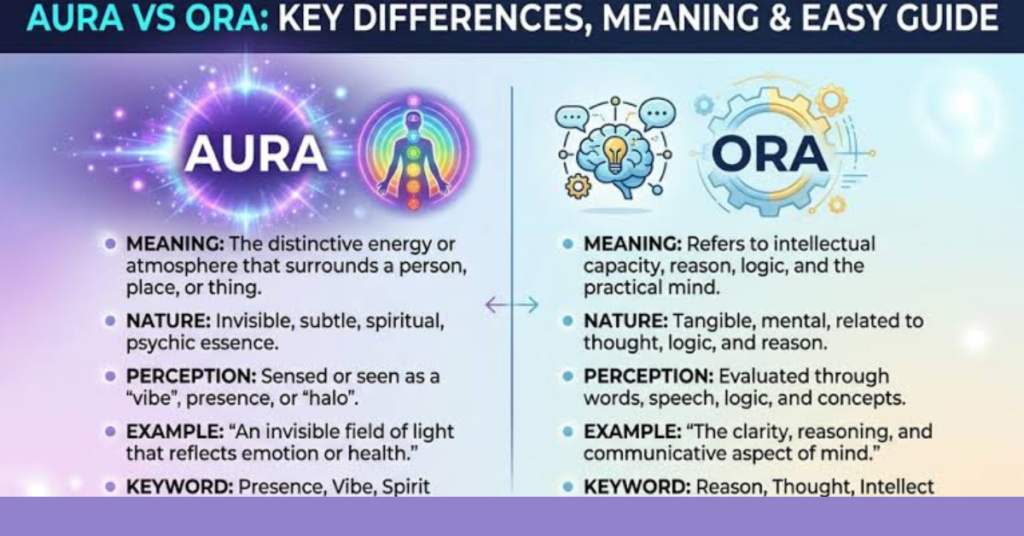
Aura vs. Ora: Simple Comparison
| Word | Common English Use | Example |
| Aura | Atmosphere, presence, feeling, or distinctive quality | “She has a peaceful aura.” |
| Ora | Not normally used as an alternative spelling of aura | Usually not interchangeable with “aura” |
So, while aura and ora may sound alike in some accents, they should not be treated as interchangeable spellings in ordinary English.
How to Use Aura in a Sentence
Learning the definition is helpful, but seeing the word in natural sentences makes it much easier to remember.
Describing a Person
You can use aura to describe someone’s personality, presence, or the impression they create.
- “He has a confident aura.”
- “She has a kind and gentle aura.”
- “There was something mysterious about his aura.”
- “Her calm aura made everyone feel relaxed.”
Describing a Place
Aura can also describe the atmosphere of a particular location.
- “The library has a peaceful aura.”
- “The ancient temple has a spiritual aura.”
- “The room had an aura of luxury.”
- “The old castle has an eerie aura.”
Describing an Object or Experience
The word can also describe the feeling associated with an object, artwork, event, or experience.
- “The painting has an aura of mystery.”
- “The ceremony created an aura of celebration.”
- “The vintage furniture gives the room a nostalgic aura.”
- “The old photograph has an aura of sadness.”
Synonyms for Aura
The best synonym depends on what you’re describing. For a person, presence or vibe may sound more natural. For a place, atmosphere or ambiance may be a better choice.
When talking about a person:
- presence
- vibe
- energy
- charisma
- impression
- personality
When talking about a place:
- atmosphere
- ambiance
- mood
- feeling
- character
- environment
Even so, these words don’t always mean exactly the same thing. Aura has a slightly more expressive quality and often suggests an intangible feeling surrounding someone or something.
Is Aura Always a Positive Word?
Not at all. Although people often use aura in a positive way, the word itself is neutral.
The type of aura depends on the context.
For example:
- Positive: “She has a warm aura.”
- Neutral: “The building has an unusual aura.”
- Negative: “There was an aura of tension in the room.”
- Mysterious: “The forest had an eerie aura.”
- Elegant: “The hotel has an aura of sophistication.”
Therefore, an aura can be pleasant, unsettling, mysterious, peaceful, or even intimidating.
Aura and “Vibe”: Are They the Same?
Aura and vibe are similar, but they aren’t exactly the same.
The word vibe is more casual and is commonly used to describe the feeling you get from a person, place, or situation.
For example:
- “This café has a nice vibe.”
- “This café has a relaxing aura.”
Both sentences make sense. However, aura can sound a little more descriptive and often emphasizes a distinctive quality surrounding someone or something.
In everyday social media language, though, the two words are frequently used in similar ways.
Common Mistakes With Aura
Knowing the common mistakes can make the correct spelling easier to remember.
Mistake 1: Writing “Ora” Instead of “Aura”
If you’re talking about someone’s presence, don’t write:
“She has a beautiful ora.”
The standard English spelling is:
“She has a beautiful aura.”
Mistake 2: Assuming Aura Only Has a Spiritual Meaning
Aura isn’t limited to spirituality. In everyday English, it can simply mean an atmosphere, impression, or distinctive presence.
For example:
“The room had an aura of elegance.”
There’s nothing necessarily spiritual about this sentence.
Mistake 3: Using Aura When Atmosphere Is More Precise
Although aura is a useful word, it isn’t always the best choice.
If you’re simply describing the general mood of a room, atmosphere or ambiance may be clearer.
For example:
“The restaurant has a cozy atmosphere.”
This may be more natural than:
“The restaurant has a cozy aura.”
Both are understandable, but the first is more straightforward.
Is “Aura” a Modern Slang Word?
Not exactly.
The word aura has been used in English for a long time. However, social media and internet culture have made its casual use much more popular.
Today, you might hear expressions such as:
- “good aura”
- “strong aura”
- “main character aura”
- “positive aura”
- “negative aura”
- “zero aura”
In these expressions, aura often refers to someone’s confidence, presence, energy, or overall impression.
For example, when someone says:
“She has main character aura.”
They usually aren’t talking about a literal energy field. They’re describing someone who appears confident, noticeable, charismatic, or self-assured.
Aura or Ora: Frequently Asked Questions
Is it aura or ora?
Aura is the correct spelling when you mean a distinctive atmosphere, presence, quality, or feeling surrounding a person or thing.
What is the aura or ora meaning?
The word aura generally means a distinctive quality, atmosphere, or impression associated with someone or something. In spiritual contexts, it can refer to an energy field believed to surround a person.
Is “ora” a correct word?
“ora” can exist as a word, name, or expression in particular languages and contexts. However, it is not the standard English spelling of aura when you’re referring to someone’s presence or an atmosphere.
How do you pronounce aura?
Aura is commonly pronounced approximately OR-uh or AW-ruh, depending on the speaker’s accent and dialect.
What does it mean when someone says “you have an aura”?
Usually, it means that you give off a particular feeling or impression. Depending on the context, it could suggest confidence, kindness, mystery, calmness, elegance, charisma, or another noticeable quality.
Is aura the same as energy?
Not exactly. In casual conversation, aura and energy can have similar meanings when describing someone’s presence. However, aura also has distinct everyday, spiritual, and medical meanings.
What is the plural of aura?
The standard plural of aura is auras.
For example:
“The artwork in the gallery seemed to have different auras.”
Final Thoughts on Aura or Ora
If you’ve been wondering “aura or ora?”, the answer is simple: when you’re talking about a person’s presence, a distinctive atmosphere, or a particular feeling surrounding something, aura is the standard English spelling.
The aura or ora meaning can seem confusing because pronunciation may make the word sound like “ora.” Nevertheless, remembering the spelling a-u-r-a will help you avoid the mistake.
Whether you’re describing someone’s calm presence, a mysterious old building, or the peaceful atmosphere of a room, aura is a versatile word that can add personality and depth to your writing.
So next time you’re unsure, remember: if you mean that distinctive feeling or presence, it’s aura—not ora.