
Have you ever wanted to start a conversation but didn’t know what to say? A simple question like can instantly make a conversation warmer and show that you genuinely care about someone. Although it sounds like a basic phrase, its meaning can change depending on the situation, tone, and relationship between people.
This guide explains what this expression means, how to answer it naturally, different ways to use it, and how to say it in Spanish. Whether you are chatting with a friend, communicating at work, or improving your English skills, understanding this common phrase can make your conversations smoother.
What Does “How Is Your Day Going” Mean?
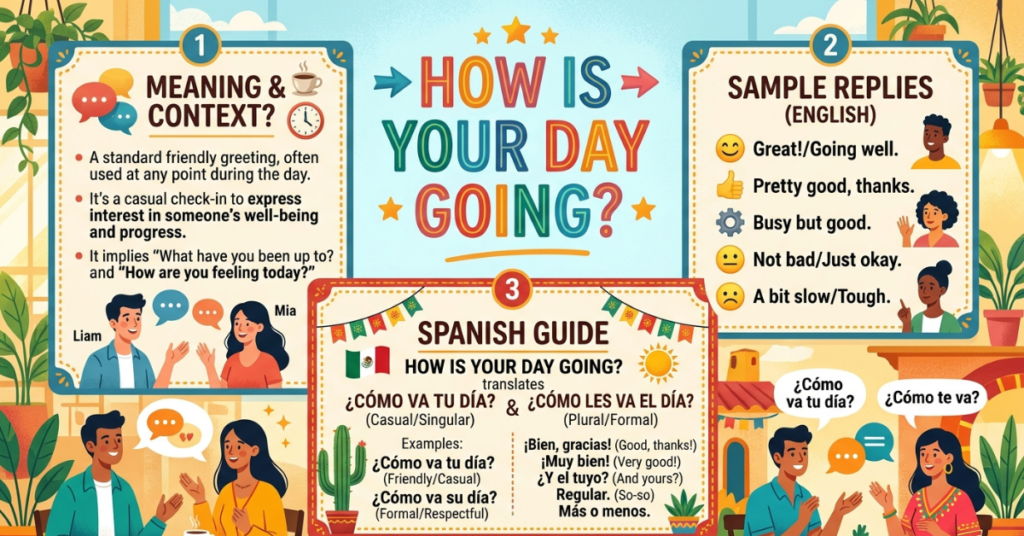
The phrase is a friendly way to ask about someone’s current experience, feelings, or activities during the day. It is commonly used to check on a person and encourage them to share an update.
Unlike a simple greeting like “hello,” this question invites a more personal conversation. The person can give a short answer or explain more about their day.
Examples:
- “It’s going well! I finished my work early.”
- “It has been a little stressful, but I’m managing.”
This expression is popular in everyday conversations because it sounds polite, caring, and natural.
Difference Between “How Is Your Day?” and “How Is Your Day Going?”
These two phrases have almost the same meaning, but there is a slight difference in focus.
How Is Your Day?
This version is shorter and asks about the overall experience of someone’s day.
Example:
“Hey, how is your day?”
Possible responses:
- “Pretty good.”
- “It’s been busy.”
- “Not bad.”
How Is Your Day Going?
This version focuses more on what is happening at the moment. It asks how things are progressing right now.
Example:
“You have been working all morning. How is your day going?”
Possible replies:
- “It’s going great so far.”
- “A little tiring, but okay.”
- “Better than I expected.”
Both phrases are correct, but the longer version often feels more conversational and shows a little more interest.
How to Reply to This Question Naturally
Many people understand the meaning but are unsure how to respond. Your answer depends on your mood and how much information you want to share.
Positive Replies
If your day is going well, you can say:
- “My day is going really well, thanks for asking.”
- “It’s been great so far!”
- “Pretty good. I’ve had a productive day.”
- “Amazing! I’m feeling happy today.”
Neutral Replies
For an ordinary day, you can use:
- “It’s going okay.”
- “Not bad, just a regular day.”
- “Pretty normal, nothing exciting.”
- “I’m doing fine, thanks.”
Replies When Your Day Is Difficult
You can be honest while keeping a positive tone:
- “It has been a little challenging, but I’m handling it.”
- “A bit stressful today, but hopefully it gets better.”
- “Not the best day, but I’m staying positive.”
Casual Text Replies
In messages with friends, shorter answers are common:
- “Good so far”
- “Pretty chill today.”
- “Busy but productive.”
- “Can’t complain!”
How to Say “How Is Your Day Going” in Spanish?
If you are learning Spanish, there are several natural ways to ask someone about their day.
The most common translation is:
¿Qué tal tu día?
Meaning: “How’s your day?”
This is a casual expression often used with friends and family.
¿Cómo te va hoy?
Meaning: “How are you doing today?”
This sounds friendly and natural in everyday conversations.
¿Cómo va su día?
This is the formal version used when speaking respectfully to someone, such as a client, customer, or older person.
English and Spanish Comparison Table
| English Expression | Spanish Translation | Usage |
| How is your day going? | ¿Cómo va tu día? | Everyday conversations |
| How is your day? | ¿Qué tal tu día? | Casual situations |
| How are you doing today? | ¿Cómo te va hoy? | Friendly conversations |
| How has your day been? | ¿Cómo ha ido tu día? | Asking about the whole day |
Why Do People Ask About Someone’s Day?
A simple question about someone’s day can create a stronger connection. It shows attention, kindness, and emotional awareness.
People use it to:
- Start conversations naturally
- Show interest in someone’s life
- Check how someone is feeling
- Build stronger personal relationships
- Make professional communication friendlier
For example, when a manager asks an employee about their day, it can create a more comfortable workplace atmosphere. Among friends, it can show care and support.
Real-Life Examples
Conversation With a Friend
A: Pretty good! I went shopping and met an old friend.
Workplace Conversation
A: It’s been productive. I’m finishing some important tasks.
Text Message Example
A: Busy, but everything is going well!
What Does “How Is Your Day Going So Far?” Mean?
Adding “so far” changes the focus slightly. It asks about everything that has happened until the current moment.
People usually use this phrase during the morning or afternoon when they want a quick update.
Examples:
- “You have been at work for a few hours. How is your day going so far?”
It often encourages a more detailed response because it asks about progress rather than the entire day.
Tips to Make Your Conversations More Natural
If you want to sound more fluent in English, avoid replying with only one word every time. Adding a small detail makes your answer feel more engaging.
Instead of:
“Good.”
Try:
“Pretty good. I finished my project, so I’m feeling relaxed.”
Helpful tips:
- Add a short detail about your day.
- Ask the question back.
- Match your response to the situation.
- Use friendly expressions when texting.
Example:
Person A: It’s going well, thanks! How about yours?
This keeps the conversation active and natural.
Key Takeaways
- This phrase is a friendly way to ask about someone’s daily experience.
- It works well in both casual and professional conversations.
- ¿Cómo va tu día? is the most common Spanish translation.
- Replies can be positive, neutral, or honest depending on your situation.
- Adding details makes conversations more meaningful.
Frequently Asked Questions
What does “how is your day going” mean?
It means asking someone about their current day, including their feelings, activities, or overall experience. It is a friendly way to show interest.
How do you reply to this question?
You can answer with phrases like “It’s going well, thanks,” “Pretty good so far,” or share a short update about what you are doing.
How is your day going in Spanish?
The most natural translation is ¿Cómo va tu día? You can also say ¿Qué tal tu día? in casual conversations.
Is “how is your day?” grammatically correct?
Yes, it is correct. It is a shorter way of asking about someone’s daily experience.
What is the difference between “how is your day” and “how are you”?
“How are you?” asks about general wellbeing, while asking about someone’s day focuses on their activities and experiences.
How do you say “how is your day going so far” in Spanish?
You can say ¿Cómo va tu día hasta ahora? or use the more casual ¿Qué tal tu día hasta ahora?
Conclusion
A small conversation starter can make a big difference. Asking about someone’s day shows kindness, builds connections, and helps conversations feel more natural.
By understanding the meaning, learning different replies, and knowing the Spanish translations, you can use this everyday expression with more confidence. Practice using different variations and make your daily conversations more engaging.