
Have you ever needed to miss work, leave school early, or cancel plans but felt uncomfortable saying “family emergency”? You’re not alone. Many people want to protect their privacy while still being respectful and honest.
If you’ve been wondering what to say instead of family emergency, there are plenty of professional, polite, and appropriate alternatives. Whether you’re speaking to your boss, teacher, client, or colleague, the right wording can help you communicate your situation without revealing personal details.
In this guide, you’ll learn when to use alternative phrases, the best expressions for different situations, examples of what to say, what to avoid, and how to maintain professionalism while protecting your privacy.
Why People Look for Another Way to Say “Family Emergency”
The phrase “family emergency” is widely understood, but it can sometimes feel too vague, overused, or emotionally heavy. Some people simply prefer language that sounds more professional or less dramatic.
Common reasons include:
- Wanting to keep personal matters private.
- Needing a more formal phrase for work.
- Avoiding unnecessary questions.
- Explaining a non-critical family situation.
- Communicating respectfully in professional settings.
The good news is that you don’t always need to provide detailed explanations.
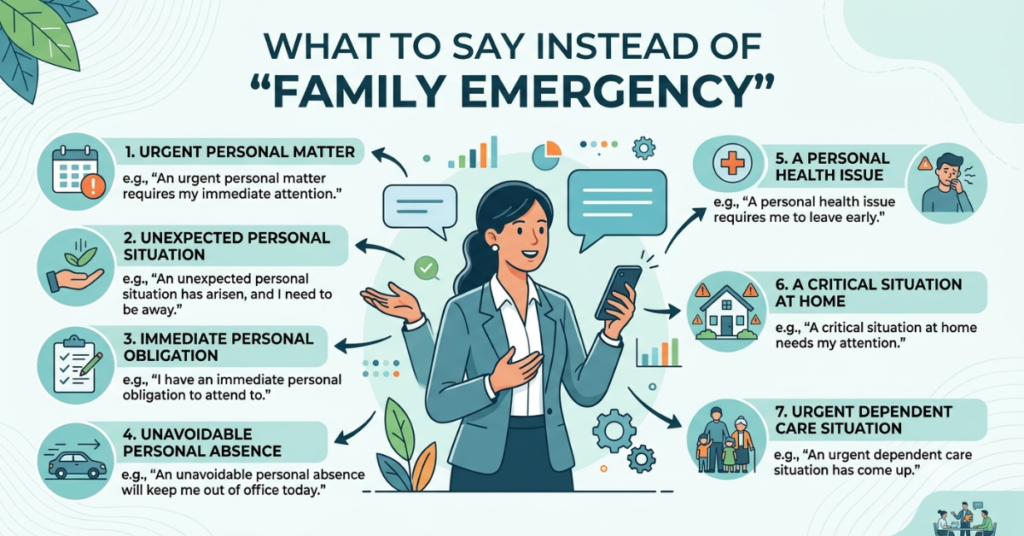
Professional Alternatives to “Family Emergency”
Here are some of the best alternatives depending on your situation.
1. Family Matter
This is one of the safest and most professional options.
Example:
“I need to leave early today due to a family matter.”
Best for:
- Work
- School
- Business meetings
2. Personal Family Issue
This phrase sounds respectful while maintaining privacy.
Example:
“I’m dealing with a personal family issue and won’t be available this afternoon.”
Ideal when you want to acknowledge the situation without sharing details.
3. Urgent Personal Matter
Sometimes the situation isn’t directly about a family member but still requires immediate attention.
Example:
“I have an urgent personal matter that requires my immediate attention.”
Suitable for:
- Employers
- Clients
- Professional emails
4. Family Obligation
Perfect when you’re attending to responsibilities rather than an emergency.
Example:
“I have an important family obligation this evening.”
This sounds honest and professional.
5. Private Family Situation
If confidentiality is important, this phrase works well.
Example:
“I’m handling a private family situation and may be unavailable today.”
6. Personal Commitment
When the issue isn’t necessarily urgent but still important.
Example:
“I have an unexpected personal commitment that I need to attend.”
7. Immediate Personal Matter
This emphasizes urgency without sounding alarming.
Example:
“An immediate personal matter has come up, and I need to step away.”
8. Family Responsibility
Useful when caring for children, parents, or relatives.
Example:
“I need to attend to an important family responsibility.”
9. Unexpected Personal Circumstances
This phrase sounds polished in formal communication.
Example:
“Due to unexpected personal circumstances, I won’t be able to attend today’s meeting.”
10. Personal Emergency
If the issue affects you directly rather than another family member.
Example:
“I’m dealing with a personal emergency and need to take the rest of the day off.”
What to Say Instead of Family Emergency at Work
Professional communication should be brief, respectful, and honest.
Here are some workplace-friendly examples:
- “I have an urgent family matter to attend to.”
- “Something personal has come up that requires my immediate attention.”
- “I need to take emergency leave for a personal matter.”
- “I’m unavailable due to an unexpected family situation.”
- “I need to leave because of an important personal obligation.”
Most managers appreciate concise communication more than lengthy explanations.
What to Say Instead of Family Emergency in an Email
If you’re writing an email, professionalism matters.
Example 1
Hello,
I wanted to let you know that I need to take today off due to a personal family matter. I appreciate your understanding and will return as soon as possible.
Thank you.
Example 2
Unfortunately, an urgent personal matter requires my immediate attention today. I’ll keep you updated regarding my availability.
Alternatives for School or College
Students often need a respectful explanation without oversharing.
Good options include:
- Family matter
- Personal circumstances
- Family responsibility
- Urgent personal issue
- Important family obligation
Example:
“I won’t be able to attend class today because of an important family matter.”
Alternatives for Canceling Plans
Friends usually don’t need formal explanations.
Instead, say:
- Something personal came up.
- I have a family commitment.
- I need to handle something at home.
- A personal issue needs my attention.
- I have an unexpected obligation.
Example:
“I’m sorry, but something personal came up. Can we reschedule?”
When Should You Use These Alternatives?
Choose your wording based on the situation.
| Situation | Best Alternative |
| Work | Family matter |
| School | Personal circumstances |
| Business meeting | Urgent personal matter |
| Friends | Something personal came up |
| Clients | Unexpected personal circumstances |
| HR communication | Family responsibility |
| Formal email | Personal family issue |
Is It Okay Not to Explain the Details?
Absolutely.
In many workplaces and schools, you’re not required to explain private family matters unless policy requires documentation.
Instead, keep your message:
- Honest
- Brief
- Respectful
- Professional
For example:
“I need to take leave due to a personal family matter.”
That’s often all that’s necessary.
What Not to Say
Avoid phrases that may sound exaggerated or misleading.
Instead of:
- “Everything is falling apart.”
- “It’s a disaster.”
- “I can’t deal with this.”
- “It’s complicated.”
Choose calm, professional language.
Also avoid inventing emergencies if the situation isn’t truly urgent. Honesty helps maintain trust.
Tips for Communicating Professionally
Keep these best practices in mind:
- Inform the other person as soon as possible.
- Keep your explanation concise.
- Avoid unnecessary personal details.
- Offer updates when appropriate.
- Express appreciation for their understanding.
- Follow workplace or school policies.
Professional communication builds credibility even during difficult situations.
Common Situations and Better Responses
Scenario: Leaving Work Early
Instead of:
“Family emergency.”
Try:
“I need to leave early because of an urgent family matter.”
Scenario: Missing School
Instead of:
“Emergency at home.”
Try:
“I have an important family responsibility that requires my attention.”
Scenario: Canceling a Meeting
Instead of:
“Something happened.”
Try:
“An unexpected personal matter has come up, and I’ll need to reschedule.”
Scenario: Canceling Dinner with Friends
Instead of:
“Family emergency.”
Try:
“Something personal came up at home. Can we meet another day?”
How Much Information Should You Share?
The answer depends on your relationship with the person.
Generally:
- Managers need enough information to understand your absence.
- Teachers usually only need a brief explanation.
- Friends may appreciate a little more context.
- Clients benefit from professional, concise communication.
Remember that protecting your privacy is perfectly acceptable.
Key Takeaways
- “Family matter” is the most versatile and professional alternative.
- You don’t have to reveal personal details to communicate respectfully.
- Choose wording based on the situation and audience.
- Stay honest while protecting your privacy.
- Brief, professional communication is usually the best approach.
Frequently Asked Questions
What can I say instead of family emergency at work?
Professional alternatives include “family matter,” “urgent personal matter,” “personal family issue,” or “unexpected personal circumstances.” These phrases sound respectful while maintaining your privacy.
Is “family matter” more professional than “family emergency”?
Yes. “Family matter” often sounds more neutral and professional, especially when the situation isn’t a life-threatening emergency. It’s widely accepted in workplace communication.
Can I say “personal matter” instead of family emergency?
Absolutely. “Personal matter” is a common, professional expression that doesn’t require further explanation and works well in both workplace and academic settings.
Do employers have the right to ask for details?
Policies vary by employer and location. In many cases, employers can ask for information related to leave requirements, but you’re often not expected to share intimate personal details unless documentation is required.
What’s the best excuse for leaving work without explaining everything?
A simple statement like, “I need to attend to an urgent personal matter,” is usually sufficient. Keep your explanation honest, concise, and professional.
How do I politely cancel plans because of a family issue?
You can say, “I’m sorry, but something personal has come up, and I need to cancel today. I hope we can reschedule soon.” This is considerate without revealing private information.
Conclusion
Knowing what to say instead of family emergency can make difficult conversations easier while helping you maintain professionalism and privacy. Whether you’re notifying your employer, informing a teacher, or canceling personal plans, phrases like “family matter,” “urgent personal issue,” and “personal circumstances” communicate your situation clearly without unnecessary details.
The best approach is to be honest, respectful, and concise. By choosing thoughtful language that fits the context, you can protect your personal life, maintain trust, and handle unexpected situations with confidence. Keep these alternatives in mind so you’re prepared whenever life requires your immediate attention.