
Have you ever typed compair or compare and stopped for a second, wondering which one is right? You are not alone. It is one of those small spelling doubts that shows up all the time in writing, searches, and everyday conversation.
The simple answer is this: compare is the correct spelling. Compair is usually a misspelling, although it may appear in names, brands, or rare special cases. In this article, we will break down the difference between compare and compair, explain what compare means, show how to use it correctly, and answer the most common questions people ask.
What Does “Compare” Mean?
The word compare means to look at two or more things and notice how they are similar or different.
For example:
- Compare two phones before buying one.
- Compare the old design with the new one.
- It is helpful to compare prices before shopping.
In simple words, compare helps you make a judgment by placing things side by side.
Compair or Compare: Which One Is Correct?
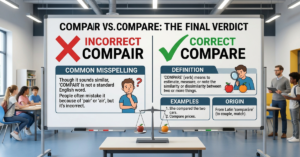
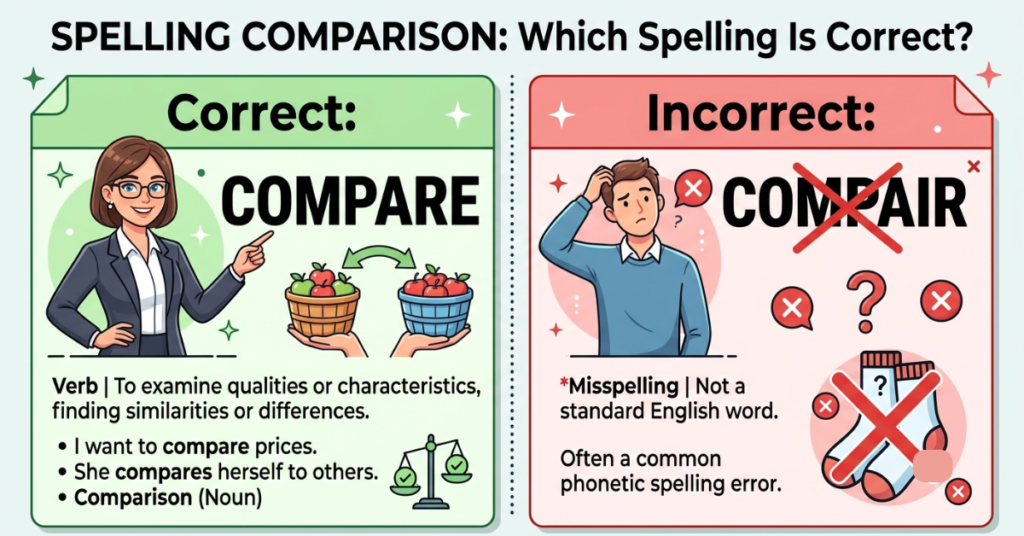
If you are writing standard English, compare is the correct word.
Compair is not the accepted spelling in normal grammar or writing. Most people type it by mistake because the word sounds like it might include “air” at the end. But in English, the correct form is compare with -are.
Easy way to remember it
Think of the word pare in compare.
You can also remember that it relates to comparison, which also uses the same root idea.
Why Do People Mistype “Compair”?
There are a few common reasons:
- Pronunciation confusion – The word sounds like “com-pair,” so people spell it that way.
- Typing habits – Autocorrect does not always catch it.
- Learning English as a second language – Some spelling patterns in English are not obvious.
- Search behavior – Many users type the wrong version when they are unsure.
That is why compair or compare is such a common search phrase.
Compare in Simple Sentences
Here are some clear examples of how to use compare correctly:
- I like to compare two brands before I make a purchase.
- She compared the two reports carefully.
- You should compare the features before choosing a laptop.
- It is hard to compare these two designs because they are so different.
Notice how compare is used when there is an action of evaluating.
Difference Between Compare and Compair
The difference is very simple:
| Word | Is it correct? | Meaning |
| compare | Yes | To examine similarities or differences |
| compair | No, in standard English | Usually a misspelling |
So if you are writing an email, essay, article, caption, or blog post, always choose compare.
When Should You Use Compare?
Use compare when you want to:
- evaluate options
- judge quality
- study differences
- check similarities
- make a decision
Common use cases
- Product reviews
- Shopping guides
- Academic writing
- Business analysis
- Everyday comparisons
For example, in SEO content, writers often compare tools, services, products, or features to help readers choose the best option.
Compare Synonyms You Can Use
If you want your writing to sound more natural and less repetitive, you can use related words such as:
- contrast
- evaluate
- examine
- differentiate
- measure
- assess
These words do not always mean exactly the same thing as compare, but they can work in similar contexts.
How to Remember the Correct Spelling
A few memory tricks can help:
- Compare looks like comparison
- Compare is the form you see in books, articles, and schools
- Compair is not the standard English spelling
A fast test: if you are unsure, ask yourself whether you would also write “compairison.” Of course not. That is the same reason compare is correct.
Why This Spelling Matters for SEO
Using the correct spelling matters because search engines try to match what users are really looking for.
If you are writing content around compair or compare, the phrase can help capture common search mistakes. But the article itself should use the proper spelling compare naturally and clearly.
That helps with:
- better readability
- stronger keyword relevance
- more trust from readers
- cleaner professional writing
Best Practice for Writers and Content Creators
If you are creating content, follow this simple rule:
- Use compare in the article body.
- Mention compair or compare only when addressing the spelling confusion.
- Keep the writing natural and helpful.
- Avoid stuffing the keyword too many times.
This approach keeps the content human, readable, and SEO-friendly.
FAQs About Compair or Compare
Is “compair” a real word?
In standard English, compair is not the correct spelling. The correct word is compare.
What does compare mean?
Compare means to look at two or more things and notice how they are alike or different.
Why do people search for compair or compare?
People often hear the word spoken aloud and spell it the way it sounds. That is why this search phrase is so common.
Can I use compair in formal writing?
No. In formal writing, always use compare.
Is compare used in business and SEO?
Yes. Compare is widely used in business reports, product reviews, decision-making content, and SEO articles.
Conclusion
When it comes to compair or compare, the correct spelling is compare. It is the standard English word used when examining similarities, differences, or choices between things.
If you are writing for school, work, or SEO, use compare every time and treat compair as a common spelling mistake. That small correction makes your writing clearer, more professional, and easier to trust.
To keep improving your writing, explore related spelling guides, grammar tips, and comparison articles that help you write with more confidence.