
Have you ever stopped while writing and wondered whether beginning spelling is correct or if you have missed a letter? This is a common confusion because the word contains a double “n,” which can be easy to overlook.
The correct spelling is beginning (B-E-G-I-N-N-I-N-G). It comes from the verb “begin,” which means to start or do something for the first time. In this guide, we will explain the correct form, common errors, spelling rules, and useful examples to help you remember it easily.
Whether you are improving your English skills, helping children learn new words, or simply checking a spelling doubt, understanding this word can make your writing more accurate.
What Is the Correct Spelling of Beginning?
The correct form is:
Beginning
The incorrect form is:
Begining
The word contains two “n” letters:
Begin + ning = Beginning
When “begin” changes into “beginning,” another “n” is added before “-ing.” This spelling pattern follows English pronunciation rules and helps maintain the original sound of the word.
Examples:
- The beginning of the story was interesting.
- She is beginning a new project today.
- We learned new beginning words in class.
Why Does Beginning Have Two N’s?
Many learners ask why “begin” becomes “beginning” instead of “begining.”
The reason is related to English spelling patterns. When adding -ing to certain verbs, the final consonant is doubled.
Examples:
- Run → Running
- Sit → Sitting
- Begin → Beginning
Although “begin” has two syllables, the stress falls on the second syllable:
be-GIN
Because of this stress pattern, the final consonant is doubled when adding “-ing.”
Is Begining or Beginning the Correct Spelling?
A common spelling question is: begining or beginning spelling — which one is right?
The answer is simple:
Beginning is correct.
Begining is incorrect.
The mistake usually happens because people remember the original word “begin” and forget to add the extra “n.”
Easy way to remember:
Think of it like this:
Begin = 1 N
Beginning = 2 Ns
Adding the extra “n” makes the spelling complete.
Dictionary Meaning of Beginning
Major English dictionaries define “beginning” as the start or first part of something.
Merriam-Webster Definition
Merriam-Webster Dictionary explains that a beginning refers to the point where something starts or the earliest stage of an event.
Examples:
- The beginning of the book introduces the main character.
- The beginning of the year is a good time for planning.
Cambridge Dictionary Meaning
Cambridge Dictionary describes beginning as the first part of something or the moment when an activity starts.
Example:
- They moved here at the beginning of summer.
These definitions confirm that “beginning” is the standard spelling used in English.
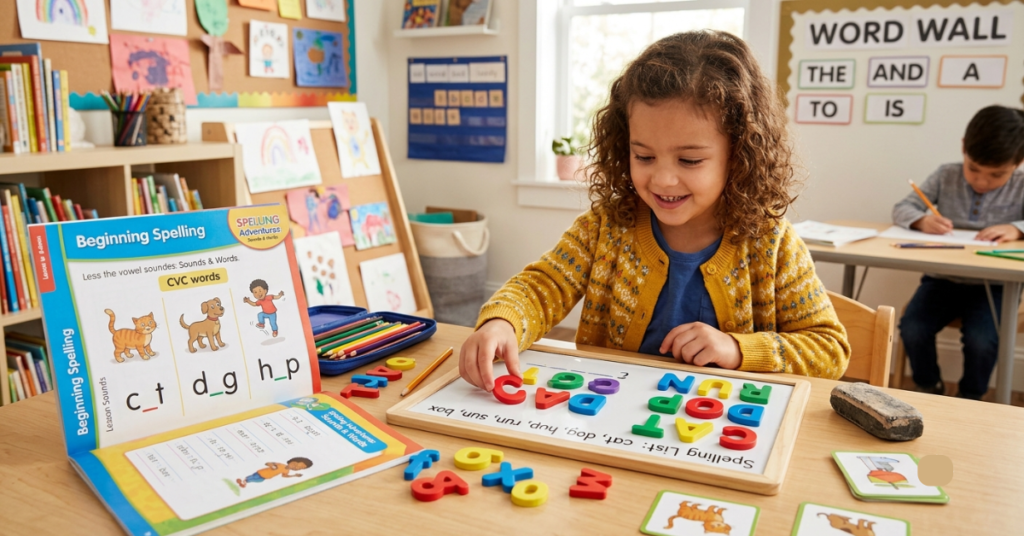
Beginning Spelling Words for Kindergarten Students
Young learners often practice simple words to build reading and writing skills. These beginner spelling words help children recognize sounds and improve vocabulary.
Common Kindergarten Spelling Words:
- Apple
- Ball
- Cat
- Dog
- Fish
- Sun
- Tree
- Book
- Chair
- House
- School
- Water
- Happy
- Jump
- Play
Tips for Teaching Early Spelling:
- Practice a few words every day.
- Use pictures to connect words with meanings.
- Encourage children to write short sentences.
- Read storybooks regularly.
These activities make learning spelling more enjoyable and effective.
How to Use Beginning in a Sentence
The word “beginning” can work as both a noun and a verb form.
As a Noun
It refers to the start or first part of something.
Examples:
- The beginning of the movie was exciting.
- I missed the beginning of the lecture.
As a Verb Form
It shows that an action is starting.
Examples:
- She is beginning her new job next week.
- The plants are beginning to grow.
Common Mistakes When Writing Beginning
Many English learners make small spelling errors with this word.
| Incorrect | Correct |
| Begining | Beginning |
| Beggining | Beginning |
| Beginingg | Beginning |
The most frequent mistake is forgetting the second “n.”
Why Correct Spelling Matters
Using the right spelling improves clarity and helps readers understand your message easily.
Good spelling is useful for:
- School assignments
- Professional writing
- Emails and messages
- Online content
- Creative writing
Even simple words can affect the quality and professionalism of your writing.
Easy Ways to Remember How to Spell Beginning
If you often forget the correct form, try these simple methods:
1. Divide the Word Into Parts
Break it down:
Be + gin + ning
Seeing the word in smaller parts makes the double “n” easier to remember.
2. Practice Writing It
Repeated writing helps create a visual memory of the word.
Example:
Beginning
Beginning
Beginning
3. Use It Frequently
Creating your own sentences helps you remember spelling naturally.
Example:
“The beginning of my journey was difficult, but I learned a lot.”
FAQs About Beginning Spelling
What is the correct spelling of beginning?
The correct spelling is beginning with two “n” letters.
Is begining a word?
No. “Begining” is a common spelling mistake. The correct form is “beginning.”
How do you spell beginning in English?
It is spelled:
B-E-G-I-N-N-I-N-G
Why is the letter n repeated in beginning?
The “n” is doubled because of English spelling rules when adding “-ing” to the verb “begin.”
What are some beginning words for kindergarten?
Common early spelling words include apple, ball, cat, dog, sun, tree, and book.
Which dictionary confirms the spelling of beginning?
Trusted sources like Merriam-Webster and Cambridge Dictionary list “beginning” as the correct English spelling.
Conclusion
The correct beginning spelling is beginning, not “begining.” Remembering the extra “n” is the key to avoiding this common mistake.
By understanding English spelling patterns, practicing regularly, and using trusted dictionaries, you can improve your vocabulary and writing confidence. Whether you are learning basic words or improving advanced English skills, mastering small spelling details can make a big difference.