
Have you ever opened an email or message late and wondered how to apologize without sounding unprofessional or careless? A simple phrase like “sorry for the delay” can acknowledge someone’s wait, but the way you express it can change depending on the situation, relationship, and tone.
Whether you are replying to a client, responding to a coworker, or answering a personal message, understanding the sorry for the delay meaning helps you communicate more thoughtfully.
In this guide, we will explain what this phrase means, when to use it, professional examples, alternative expressions, and how to write a polite delayed response.
What Does “Sorry for the Delay” Mean?
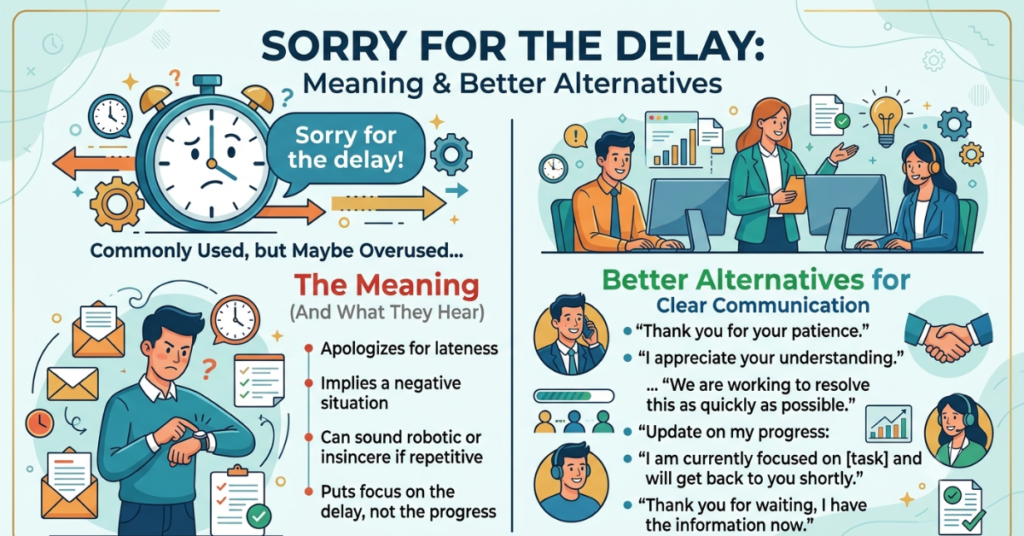
The phrase “sorry for the delay” is an apology used when something takes longer than expected. It can refer to a late reply, postponed task, delayed update, or any situation where someone has been waiting.
The meaning is:
“I apologize for taking longer than expected, and I appreciate your patience.”
This expression shows that you recognize another person’s time and understand that the wait may have caused inconvenience.
You can use it for:
- Late email replies
- Delayed project updates
- Customer service responses
- Late submissions
- Delivery delays
- Personal messages
For example:
“Sorry for the delay, I was reviewing the documents and will share my feedback today.”
This message works because it acknowledges the wait while also providing context.
When Should You Use This Phrase?
Using this apology is appropriate when your delayed response may affect someone else or when you want to show respect for their time.
1. Professional Emails
In workplace communication, ignoring a delayed response can sometimes appear careless. A short acknowledgment helps maintain professionalism.
Example:
“I apologize for the delayed response. Thank you for your patience while I reviewed the details.”
2. Client Communication
Clients usually appreciate transparency and timely updates. If a project or response takes longer than expected, acknowledging the delay helps maintain trust.
Example:
“Thank you for your patience. We have reviewed your request and will provide an update shortly.”
3. Personal Messages
In casual conversations, the wording can be simpler and more relaxed.
Example:
“Sorry for replying late, I just saw your message!”
Sorry for the Delay in Response: Professional Examples
The phrase “sorry for the delay in response” is commonly used in emails and professional conversations. However, adding appreciation or a brief explanation can make it sound more natural.
Formal Example:
“I apologize for the delay in response. Thank you for your understanding and patience.”
Professional but Friendly:
“Sorry for the late reply. I appreciate your patience.”
Client-Focused:
“Thank you for waiting. We have reviewed your request and are ready to provide an update.”
Short Version:
“Apologies for the delayed response. Thank you for your patience.”
What to Say Instead of Sorry for the Delay
Although this phrase is polite, using different expressions can make your communication sound warmer and more confident.
Here are some alternatives:
Professional Alternatives
- Thank you for your patience.
- I appreciate your understanding.
- Thank you for waiting while I reviewed this.
- I apologize for the late response.
- Thank you for allowing me time to look into this.
- I appreciate your patience during this process.
Casual Alternatives
- Thanks for waiting!
- Thanks for your patience, I just got back to this.
- I appreciate you hanging in there.
- Thanks for understanding.
Sometimes replacing an apology with appreciation creates a more positive impression.
Instead of:
“Sorry for the delay.”
You can write:
“Thank you for your patience while I worked on this.”
This shifts the focus from the mistake to appreciation.
Another Way to Say Sorry for the Delay in Different Situations
The best wording depends on who you are communicating with.
For Work Emails
Instead of saying:
“Sorry for the delay in response.”
Try:
- “Thank you for your patience while I prepared this information.”
- “I appreciate your understanding regarding the delayed reply.”
- “Thank you for giving me time to review this matter.”
For a Manager or Supervisor
Examples:
- “Apologies for the delay. I have completed the task and attached the updated file.”
- “Thank you for your patience. I have made the requested changes.”
For Customers or Clients
Examples:
- “We appreciate your patience while we resolved this issue.”
- “Thank you for your understanding during this process.”
For Friends
Examples:
- “Sorry for the late reply!”
- “Just saw your message, sorry I took so long.”
- “Thanks for waiting!”
Sorry for the Delay in Spanish
The translation of sorry for the delay in Spanish depends on the situation and level of formality.
Formal:
“Disculpe la demora.”
Meaning: Sorry for the delay.
Professional:
“Lamento la demora en mi respuesta.”
Meaning: I apologize for the delay in my response.
Casual:
“Perdón por la tardanza.”
Meaning: Sorry for being late.
For Late Replies:
“Perdón por responder tarde.”
Meaning: Sorry for replying late.
Spanish speakers may choose different expressions depending on whether the conversation is professional or personal.
How to Write a Better Delay Apology Message
A good apology message usually includes three important parts:
1. Acknowledge the Wait
Show that you understand there was a delay.
Example:
“I apologize for taking longer than expected to respond.”
2. Show Appreciation
Thank the person for their patience.
Example:
“Thank you for your patience and understanding.”
3. Provide an Update
Move the conversation forward by explaining the next step.
Example:
“I have reviewed the information and attached the completed document.”
A complete message could be:
“I apologize for the delayed response. Thank you for your patience. I have reviewed the details and attached the updated report for your review.”
Common Mistakes When Apologizing for a Delay
Avoid Repeating Apologies Too Much
Using too many apologies can make your message sound uncertain.
Instead of:
“I am extremely sorry. I really apologize for the delay.”
Try:
“Thank you for your patience. I appreciate your understanding.”
Avoid Long Explanations
A short reason is usually enough. Too many details can distract from the purpose of your message.
Better:
“I was carefully reviewing the information before responding.”
Always Include a Solution
A good apology should also explain what happens next.
Example:
“Thank you for your patience. I have completed the changes and attached the updated version.”
Why Choosing the Right Words Matters
Good communication is not only about delivering information. It is also about showing respect and maintaining relationships.
A thoughtful delayed-response message can:
- Show respect for someone’s time
- Build trust
- Maintain professionalism
- Reduce frustration
- Keep conversations positive
The words you choose can influence how your message is received.
FAQs About Sorry for the Delay
What does “sorry for the delay” mean?
It means you are apologizing for taking longer than expected and acknowledging that someone had to wait.
Is “sorry for the delay” professional?
Yes. It is commonly used in emails, workplace communication, and customer service situations.
What can I say instead of sorry for the delay?
You can use:
- “Thank you for your patience.”
- “I appreciate your understanding.”
- “Apologies for the delayed response.”
- “Thank you for waiting.”
Is “sorry for the delay in response” grammatically correct?
Yes, it is correct and frequently used in professional emails.
How do you say sorry for the delay in Spanish?
Common translations include “Disculpe la demora” for formal situations and “Perdón por la tardanza” for casual conversations.
Is it better to apologize or say thank you for waiting?
Both are acceptable. However, thanking someone for their patience often creates a more positive and professional tone.
Conclusion
The phrase “sorry for the delay” is a simple way to acknowledge a late reply or postponed action. Understanding the sorry for the delay meaning allows you to use it correctly in professional, personal, and customer conversations.
However, depending on the situation, alternatives like “thank you for your patience” or “I appreciate your understanding” can sound more polished and positive.
The next time you need to respond late, choose words that acknowledge the wait while showing respect and appreciation for the other person’s time.